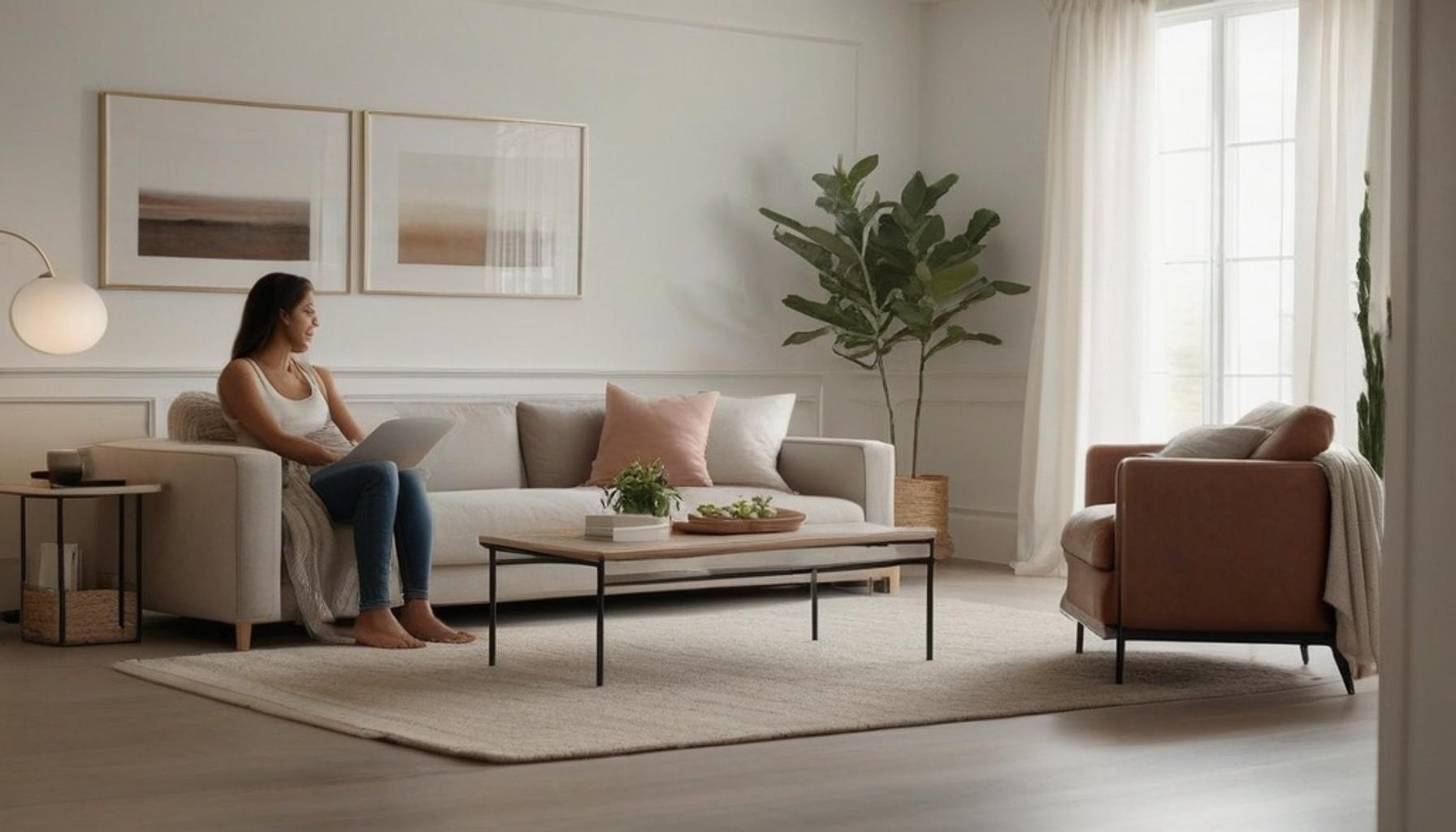
The Minimalist Mindset: Decluttering Techniques for an Organized and Stress-Free Living Space
The Impact of Clutter on Your Life
The average American household contains more than 300,000 items, according to the LA Times, and self-storage has exploded into a remarkable $39 billion industry across the nation. These staggering figures illustrate a growing disconnect between our insatiable desire for possessions and the peace of mind that comes from a tidy environment. Many individuals are beginning to question whether the relentless accumulation of items truly enhances their lives or merely contributes to mental strain.
This brings us to the minimalist mindset — a philosophy that is rapidly transforming the way people think about their homes, habits, and overall mental well-being. Minimalism encourages individuals to focus on quality over quantity, valuing experiences and relationships above material goods.
More Than a Design Trend
Minimalism transcends mere aesthetics; it involves a practical approach to mindful living that emphasizes intentionality. A serene environment can significantly impact emotional health. Studies have indicated that cluttered spaces can lead to heightened cortisol levels, particularly among women who are balancing multiple household responsibilities. In contrast, a stress-free home fosters an atmosphere that promotes better focus, improved sleep quality, and enhanced emotional stability, contributing to overall well-being.
Moreover, a clutter-free environment can encourage creativity and productivity. For instance, individuals who work from home may find that an organized workspace helps them concentrate better, ultimately leading to increased output and job satisfaction.
What This Guide Will Cover
This article outlines proven decluttering techniques that go beyond generic advice like “just throw things away.” Instead, this guide offers a systematic path toward establishing a truly organized living space. Here’s what you can expect to explore:
- How to pinpoint emotional attachments to items that no longer serve you
- Step-by-step methods for decluttering every room in your home
- The scientifically supported benefits of minimalism for mental clarity and productivity
- Simple daily habits designed to prevent clutter from creeping back
- Realistic strategies on how to declutter without becoming overwhelmed
Regardless of whether you reside in a compact city apartment or a spacious suburban family home, these techniques can seamlessly adapt to any space and lifestyle. The objective of this journey is not perfection, but to create an environment that allows you to breathe, think critically, and live with intent. By embracing a minimalist approach, you can reclaim not just physical space but emotional clarity and life satisfaction as well.
DISCOVER: Click here to unlock the secrets of a clutter-free kitchen
Understanding Why We Hold On to Things We Don’t Need
Before diving into any decluttering techniques, it’s worth asking a deeper question: why do we accumulate so much in the first place? Psychologists point to a phenomenon known as the “endowment effect,” where people assign greater value to items simply because they own them. This explains why that box of college textbooks or the drawer full of expired coupons feels harder to part with than logic would suggest.
Adopting a minimalist mindset requires confronting these emotional triggers head-on. Many Americans associate belongings with memories, security, or even identity. A closet full of clothes from a previous decade might represent a version of yourself you’re reluctant to let go of. Recognizing this pattern is the first step toward meaningful change.
Common Emotional Attachments That Fuel Clutter
Understanding the “why” behind your possessions can make the process of letting go far less overwhelming. Consider these frequent emotional categories that keep items lingering in homes across the country:
- Sentimental attachment — gifts, heirlooms, or souvenirs tied to specific memories
- Fear of waste — the belief that discarding something equals throwing away money
- “Just in case” thinking — holding onto items for hypothetical future scenarios
- Identity preservation — clothing or gear linked to a former hobby, career, or lifestyle
- Guilt-driven keeping — items received as gifts that no longer bring joy
According to a 2021 survey by the National Association of Productivity and Organizing Professionals, nearly 54% of Americans feel overwhelmed by the amount of clutter in their homes, yet only a fraction take consistent action to address it. This gap between awareness and action often stems from emotional paralysis rather than a lack of time or resources.
Shifting the Narrative Around Ownership
Embracing mindful living means redefining what ownership actually means. Instead of asking “Could I use this someday?” a more productive question is “Does this add value to my life right now?” This subtle shift in perspective is central to nearly every successful approach on how to declutter effectively.
Research from UCLA’s Center on Everyday Lives of Families found that women who described their homes as cluttered showed elevated cortisol levels throughout the day, reinforcing the connection between physical space and psychological stress. This data underscores an important truth: clutter isn’t just an aesthetic issue, it’s a wellness issue.
By identifying the emotional roots behind clutter, you set the foundation for a more sustainable, organized living space — one built on intention rather than guilt or obligation.

DISCOVER MORE: Click here to streamline your kitchen
Proven Decluttering Techniques That Actually Work
Once the emotional groundwork has been addressed, it’s time to explore practical decluttering techniques that turn intention into action. Not every method works for every personality type, which is why understanding a few different systems can help you find the right fit for your home and lifestyle.
One of the most widely referenced approaches is the KonMari Method, popularized by Japanese organizing consultant Marie Kondo. This technique asks you to sort belongings by category rather than by room, keeping only items that “spark joy.” While the phrase has become something of a cultural catchphrase in the United States, the underlying principle remains genuinely useful: evaluate possessions individually rather than dismissing entire categories at once.
The 90/90 Rule and Other Practical Frameworks
For those who find the KonMari approach too abstract, more数据-driven methods offer a clearer path. The 90/90 rule, popular among minimalist bloggers like Joshua Fields Millburn and Ryan Nicodemus of “The Minimalists,” suggests a simple test: if you haven’t used an item in the past 90 days and don’t anticipate using it in the next 90, it’s likely safe to let go.
Other effective frameworks include:
- The Four-Box Method — sorting items into keep, donate, trash, and relocate categories during each decluttering session
- The One-In-One-Out Rule — committing to remove an existing item whenever something new enters the home
- The 12-12-12 Challenge — finding 12 items to donate, 12 to trash, and 12 to return to their proper place in a single sitting
- Reverse Hanger Trick — turning clothing hangers backward and flipping them only after wearing an item, revealing unused pieces after a set period
These frameworks work because they replace vague goals with measurable actions, a strategy supported by behavioral psychologists who note that specificity increases follow-through rates significantly.
Starting Small to Avoid Burnout
A common mistake among beginners is attempting to overhaul an entire house in one weekend. Professional organizers across the country consistently recommend starting with a single drawer, shelf, or closet instead.
This incremental approach, sometimes called “micro-decluttering,” prevents decision fatigue while building momentum. A 2020 study published in the Journal of Consumer Research found that individuals who broke large organizing tasks into smaller segments were 34% more likely to complete the entire project compared to those who attempted it all at once.
Applying these decluttering techniques consistently, rather than sporadically, is what ultimately transforms a chaotic home into a genuinely organized living space — one drawer, shelf, or closet at a time.
Embracing the Minimalist Mindset for Long-Term Change
Adopting a minimalist mindset isn’t about achieving a picture-perfect home overnight. It’s a gradual shift in how Americans relate to their belongings, their time, and ultimately, their peace of mind.
Throughout this article, one theme surfaces again and again: sustainable change comes from small, consistent actions rather than dramatic overhauls. Whether someone chooses the KonMari Method, the 90/90 rule, or a simple Four-Box approach, the specific system matters less than the commitment to showing up and making decisions.
Research continues to back this up. Beyond the Journal of Consumer Research findings on incremental progress, a 2019 study from UCLA’s Center on Everyday Lives of Families linked cluttered homes to elevated cortisol levels, particularly among women managing multiple responsibilities. This suggests that minimalism benefits extend well past aesthetics, reaching into physical health and daily stress levels.
What Comes Next
Readers interested in how to declutter effectively should treat this as an ongoing practice rather than a one-time event. Seasonal check-ins, mindful purchasing habits, and periodic reassessment of personal values all reinforce the systems already put in place.
Consider these next steps:
- Schedule a recurring monthly “reset” session for one problem area
- Track emotional responses to new purchases before buying
- Involve family members so mindful living becomes a shared household value
A stress-free home isn’t defined by empty shelves or a minimalist aesthetic borrowed from social media. It’s defined by intention — knowing that every object in the space earned its place. That distinction, more than any single technique, is what separates temporary tidying from a genuinely organized living space built to last.
Frequently Asked Questions
What is the minimalist mindset and how can it help me declutter my home?
The minimalist mindset involves focusing on what truly matters to you and eliminating the unnecessary. By adopting this perspective, you can assess your possessions and decide which items genuinely add value to your life, leading to a more organized and stress-free living space.
What are some effective decluttering techniques I can use to start embracing a minimalist lifestyle?
Effective decluttering techniques include the ‘One In, One Out’ rule, where you remove one item for every new item brought in, and the ’30-Day Minimalism Game’, which challenges you to declutter a specific number of items each day. Additionally, consider using the four-box method: keep, donate, sell, and toss to categorize your belongings.
How can I maintain a minimalist mindset after decluttering my space?
To maintain a minimalist mindset, regularly evaluate your possessions and make conscious purchasing decisions. Developing habits like mindful shopping and setting limits on belongings can help you stay committed to a clutter-free lifestyle, ensuring your space remains organized and serene.
Is minimalism only about physical decluttering, or does it also include mental decluttering?
Minimalism encompasses both physical and mental decluttering. While decluttering your space helps create a peaceful environment, practicing mental decluttering involves simplifying thoughts, reducing stress, and focusing on mindfulness, contributing to overall well-being.
How can I introduce a minimalist mindset to my family or household?
Introducing a minimalist mindset to your family can start with open discussions about the benefits of decluttering and organizing. Encourage everyone to participate in the process by joining decluttering sessions together and setting shared goals, making it a collaborative effort that everyone values.
Are there any common myths about minimalism that I should be aware of?
Yes, common myths include the belief that minimalism means living with very few possessions, which isn’t true; it’s about finding balance and keeping only what serves you. Another misconception is that minimalism requires drastic changes; in reality, it can be a gradual and personalized journey tailored to your needs and lifestyle.

Beatriz
Beatriz Johnson is a seasoned minimalist and writer with a passion for simplifying the complexities of personal organization and intentional living. With over a decade of experience in decluttering strategies and mindful consumption, she specializes in topics like space optimization, habit simplification, and sustainable lifestyle choices. Through her work on our website, Beatriz empowers readers to embrace minimalism, reduce mental and physical clutter, and create more meaningful, organized lives in today's fast-paced world.