
Simplified Living: Strategies to Reduce Stress and Increase Productivity
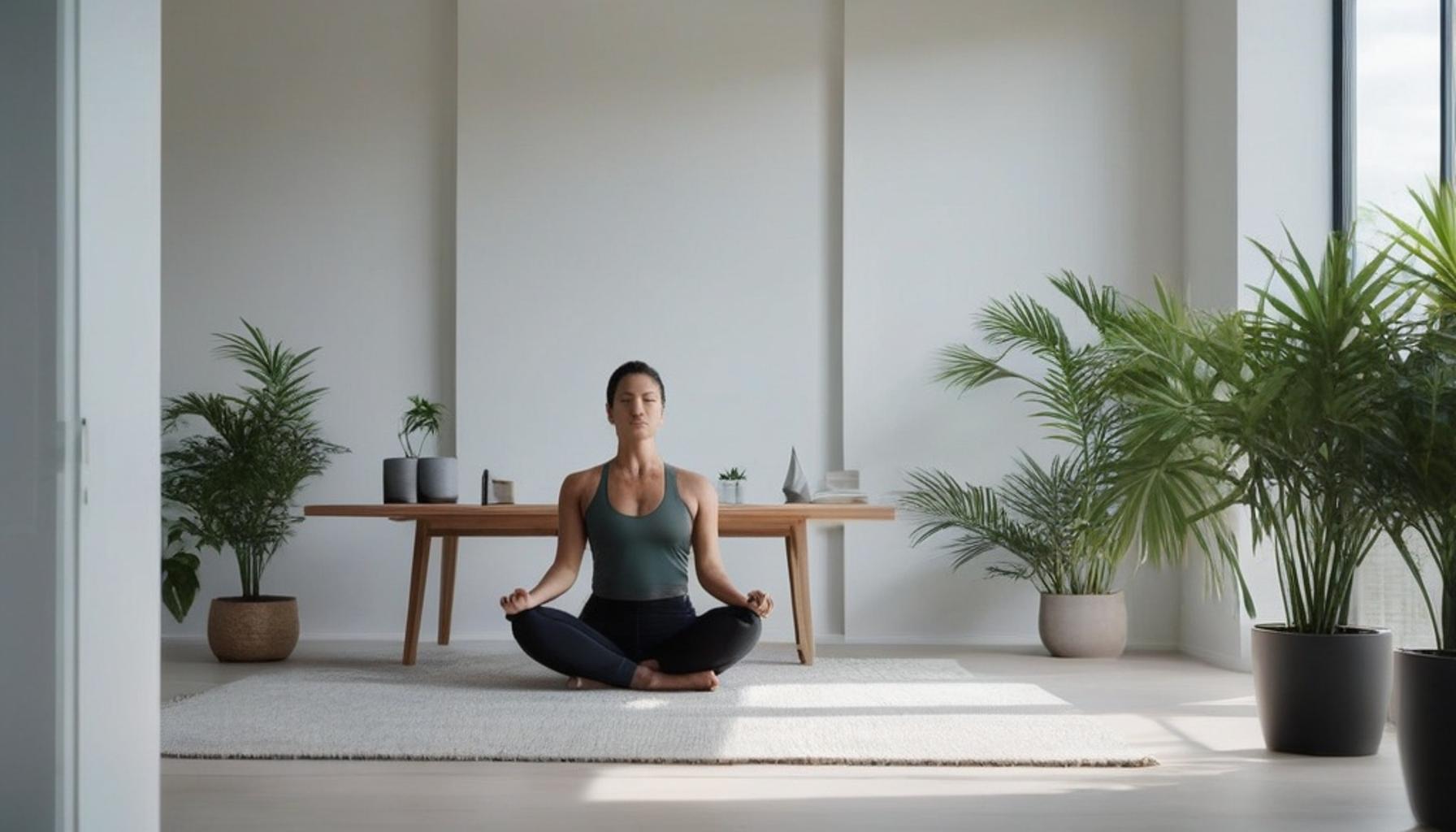
Why America Is Craving a Simpler Way of Life
Americans are feeling overwhelmed, as the demands of modern living push many to the brink. In 2023, a Gallup poll revealed that 49% of U.S. adults report feeling stressed on a daily basis, highlighting the urgent need for a shift towards a more manageable lifestyle. The incessant notifications from smartphones, relentless deadlines at work, and an endless array of commitments contribute to heightened anxiety. Recognizing this struggle, an increasing number of individuals are embracing simplified living not only as a lifestyle choice but as a crucial survival strategy.
From the bustling streets of Brooklyn to the sprawling suburbs of Texas, many people are reevaluating the amount of “stuff” in their lives and the hectic pace of their daily routines. It’s no longer a question of if one should simplify their existence, but rather how to embark on this transformative journey.
What This Article Covers
This guide aims to provide practical, research-backed methods for reclaiming valuable time and mental energy. You’ll discover:
- Proven stress reduction techniques utilized by psychologists and wellness experts, such as mindfulness practices that encourage living in the moment.
- How to increase productivity without working longer hours, including the Pomodoro Technique—a time management method that uses intervals of focused work followed by short breaks.
- The real minimalist lifestyle benefits, supported by studies that correlate decluttering with increased happiness and enhanced focus.
- Step-by-step tips for decluttering your life, stretching from organizing digital files and emails to purging unnecessary items from your physical spaces.
- Smart time management strategies that can seamlessly fit into a busy American schedule, such as batching similar tasks together to enhance efficiency.
Simplifying life does not entail sacrificing ambition or comfort; rather, it means eliminating the noise and distractions so that what truly matters can come to the forefront. Simplified living encourages deep connections with family, friends, and oneself, fostering a sense of well-being that is both elusive yet vital in today’s fast-paced world.
Are you prepared to trade chaos for clarity in your life? Join us as we delve into small, intentional changes that can transform your daily routine and, ultimately, enhance your peace of mind.
LEARN MORE: Creating a Clutter-Free Home: Effective Decluttering Techniques for Every Space
Understanding the roots of modern stress is crucial, especially in a fast-paced society where demands seem to multiply by the day. As revealed by an Asurion study in 2023, the average American checks their phone a staggering 96 times a day. That translates to nearly one check every ten minutes throughout waking hours, meaning individuals are rarely disconnected from the digital world. This constant connectivity creates an environment where our nervous systems are kept in a state of low-grade alertness, making true relaxation feel elusive for many.
This digital saturation is only compounded by the prevailing culture of busyness in American work environments. Countries in Europe often embrace extended vacations as a fundamental aspect of life, prioritizing worker well-being. For instance, nations like France and Sweden have generous paid leave policies that encourage downtime. In stark contrast, the United States stands out as one of the few industrialized nations without a legal requirement for paid vacation days, which often leads to an accumulation of unused time off. As a consequence, workers find themselves trapped in a cycle of relentless obligations, with burnout rates continuing to escalate year after year.
The Hidden Cost of Clutter
The issue of overwhelming stress is not merely psychological; it also has a physical dimension. Both physical and mental clutter can disrupt our ability to focus, assess, and interact with the world around us. Research conducted by Princeton University’s Neuroscience Institute found that visual clutter competes for attention, significantly diminishing our capacity to process information and effectively complete tasks. To illustrate, consider the disarray of piles of unopened mail or a cluttered workspace; it is more than an eyesore—it actively drains cognitive resources, leaving less mental energy for creativity and productivity.
This is where simplified living comes into play. It is not simply a trend that looks good on social media platforms, but rather a meaningful response to increasing mental strain. When individuals tackle clutter, whether decluttering a closet or opting out of multiple email newsletters, they often report feeling an immediate sense of lightness. Studies have consistently shown that engaging in decluttering activities correlates with measurable drops in cortisol levels, the body’s primary stress hormone, highlighting the tangible benefits of minimalism.
Signs You Might Need to Simplify
Are you questioning whether simplified living could be beneficial for you? Here are several indicators suggesting that you might need to simplify your life:
- Feeling anxious when your phone battery drops below 20%, fearing the loss of connection to constant updates and notifications.
- Struggling to find personal items in your home despite feeling convinced you have “everything you need,” which may indicate an excess of possessions.
- Saying yes to social commitments out of guilt rather than genuine desire, leading to an overloaded calendar and social fatigue.
- Experiencing difficulty maintaining focus on a single task, often interrupted by the urge to check emails, social media notifications, or messages.
- Feeling a pervasive sense of dread when glancing at your to-do list, even during moments of supposed relaxation.
If any of these scenarios resonate with you, rest assured that you are not isolated in this experience. More critically, there are direct, practical stress reduction techniques specifically designed to counteract these modern pressures. Embracing the ethos of simplified living is not about deprivation; it focuses on strategically removing elements that do not serve your well-being, thus making space for what genuinely enhances your quality of life.
By embracing simplification, individuals may reclaim both their time and peace of mind, promoting a healthier relationship with themselves and the world around them. The journey toward a less complicated life could very well lead to a more fulfilled existence, free from the clutches of modern overwhelm.

| Category | Description |
|---|---|
| Decluttering Your Life | Eliminating unnecessary items fosters mental clarity and reduces stress. |
| Time Management Strategies | Techniques like the Pomodoro Technique help individuals focus leading to increased productivity. |
| Minimalist Lifestyle Benefits | A minimalist approach can foster a sense of peace and improve decision-making ease. |
| Stress Reduction Techniques | Mindfulness and breathing exercises are practical tools for controlling stress levels. |
YOU MAY ALSO LIKE: Smart Storage Hacks: Innovative Solutions for Maximizing Small Space Organization
Practical Frameworks for a Minimalist Lifestyle
Once the need for change becomes clear, the next logical step is action. Fortunately, simplified living does not demand an overnight transformation or a drastic purge of belongings. Instead, sustainable change tends to emerge from small, deliberate systems that reduce decision fatigue and reclaim mental bandwidth.
The 80/20 Rule Applied to Daily Life
Many productivity experts point to the Pareto Principle, which suggests that roughly 80% of results come from just 20% of efforts. Applied to daily routines, this means identifying the small number of tasks, relationships, and possessions that generate the majority of value in your life. For example, an entrepreneur in Austin, Texas, might discover that only two of her ten weekly meetings actually drive business growth, while the rest merely consume hours better spent elsewhere. Recognizing this imbalance allows for more informed choices about where energy should be directed.
Time Blocking as a Time Management Strategy
Among the most effective time management strategies gaining traction is time blocking, a method popularized by tech executives and productivity coaches alike. Rather than reacting to a constant stream of emails and notifications, individuals schedule specific blocks for focused work, communication, and rest. A 2022 report from the American Psychological Association noted that employees who structured their day into intentional blocks reported a 20% increase in task completion rates compared to those who worked reactively. This approach directly counters the fragmented attention span cultivated by constant phone checking.
Digital Minimalism in Practice
Simplifying digital life is just as important as decluttering physical spaces. Consider the following approaches many productivity researchers recommend:
- Turning off non-essential notifications to reduce interruptions throughout the workday.
- Designating specific windows for checking email, rather than responding instantly to every message.
- Unsubscribing from newsletters and promotional lists that no longer serve a clear purpose.
- Using grayscale mode on smartphones, a tactic some users say reduces the visual appeal of endless scrolling.
- Setting a “digital sunset,” meaning a specific time each evening when screens are put away entirely.
These strategies fall under a broader movement often called digital minimalism, a term coined by computer science professor Cal Newport. His research suggests that intentional technology use, rather than complete avoidance, is often the most realistic path toward reclaiming attention in a hyperconnected society.
Decluttering Your Life Beyond the Closet
While closets and garages are common starting points, decluttering your life can extend into less obvious areas. Financial clutter, such as unused subscriptions or unnecessarily complex banking arrangements, can create ongoing background stress. Similarly, social obligations that feel more draining than fulfilling represent a form of clutter worth reassessing.
The minimalist lifestyle benefits extend beyond simply having fewer possessions; they touch nearly every dimension of daily functioning. A 2021 survey conducted by the National Association of Productivity and Organizing Professionals found that 27% of Americans consider disorganization to be a direct source of workplace stress, underscoring how deeply intertwined our physical and digital environments are with our mental state.
Rethinking Simplicity as an Ongoing Practice
Across every strategy explored, one theme keeps surfacing: simplified living is not a single event but an evolving practice. Whether it involves applying the 80/20 rule to a packed calendar or setting a nightly digital sunset, the goal remains the same, which is to create more room for what actually matters.
The data referenced throughout this discussion, from the American Psychological Association’s findings on task completion to the National Association of Productivity and Organizing Professionals’ research on workplace stress, points to a consistent pattern. Clutter, whether physical, digital, or scheduled, has a measurable cost. Addressing it through practical stress reduction techniques and structured time management strategies is not simply a lifestyle preference but a response supported by observable outcomes.
Small Shifts, Compounding Results
What makes this approach accessible is its flexibility. There is no requirement to adopt every method at once. A professional in Seattle might begin by unsubscribing from a dozen unnecessary email lists, while a parent in Chicago might start by blocking two uninterrupted hours each morning. Over time, these small shifts compound, gradually reshaping how days feel and how much gets accomplished.
Looking Beyond the Individual
It is also worth considering that the push toward simplicity extends beyond personal habits. Companies increasingly experiment with meeting-free days, and some school districts have introduced phone-free policies, suggesting that institutions are beginning to recognize the same patterns individuals experience firsthand. This raises a broader question worth exploring further: how might workplaces, schools, and communities evolve if simplicity were treated as a shared standard rather than a personal experiment?
Ultimately, the minimalist lifestyle benefits discussed here, from clearer thinking to reduced financial noise, suggest that decluttering your life is less about minimalism as an aesthetic and more about function. For readers looking to increase productivity without burning out, the evidence suggests that less truly can produce more.
Frequently Asked Questions
What are the key principles of simplified living for reducing stress?
The key principles of simplified living include decluttering your physical space, prioritizing tasks, and embracing minimalism. By creating a more organized environment and focusing on what’s truly important, you can alleviate distractions and stressors that hinder your productivity.
How can I implement simplified living in a busy household?
In a busy household, you can implement simplified living by establishing designated zones for activities, creating a family schedule, and involving everyone in decluttering. Assign daily or weekly tasks to maintain organization, and encourage open communication about priorities to ensure everyone is aligned.
Can simplified living improve my work-from-home productivity?
Yes, simplified living can significantly improve your work-from-home productivity. By organizing your workspace, limiting digital distractions, and setting clear boundaries between work and personal time, you create an environment that fosters focus and enhances efficiency.
What specific strategies can I use for simplified living on a budget?
To practice simplified living on a budget, focus on DIY solutions for organization, such as repurposing containers for storage. Prioritize purchasing only essential items, practice mindful spending, and consider second-hand options to keep your environment clutter-free without breaking the bank.
How does simplified living impact mental health?
Simplified living positively impacts mental health by reducing overwhelm and creating a sense of control in one’s life. By minimizing clutter and distractions, individuals can experience less anxiety and increased focus, leading to better decision-making and enhanced overall well-being.

Beatriz
Beatriz Johnson is a seasoned minimalist and writer with a passion for simplifying the complexities of personal organization and intentional living. With over a decade of experience in decluttering strategies and mindful consumption, she specializes in topics like space optimization, habit simplification, and sustainable lifestyle choices. Through her work on our website, Beatriz empowers readers to embrace minimalism, reduce mental and physical clutter, and create more meaningful, organized lives in today's fast-paced world.